
Questions I carried into the classroom
Across the program, I have returned to questions about recognition, belonging, and responsibility. My projects explore how violence becomes normalized, how institutions interpret people’s experiences, and how communities create possibilities for change.
First Semester
Foundations in Human Rights and Social Justice
How do we make room for experiences that official language struggles to hold?
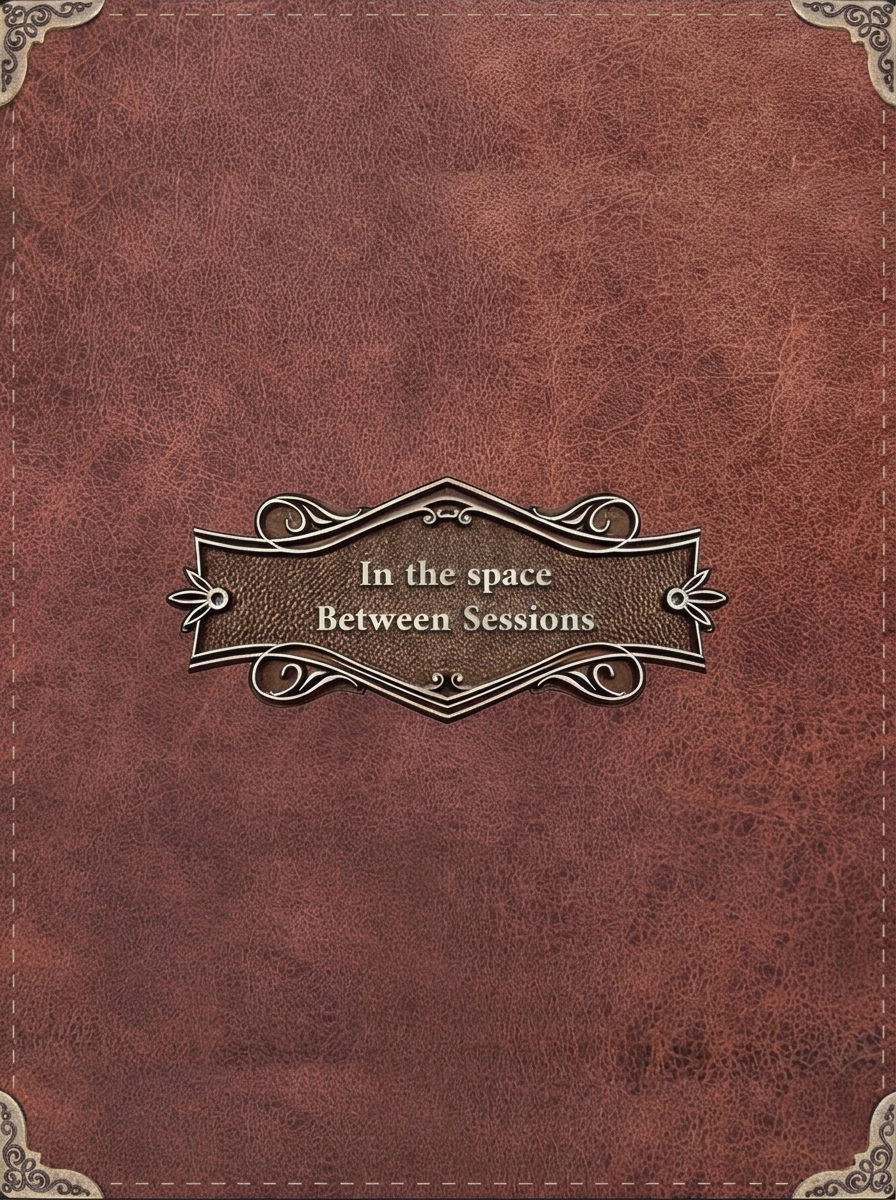
I created the femicide scrapbook In the Space Between Sessions, using fictionalized letters informed by experiences from my work as a therapist. The project brought creative expression into conversation with gendered violence, memory, and human rights.
Indigenous Ways of Knowing
What responsibilities come with receiving knowledge?
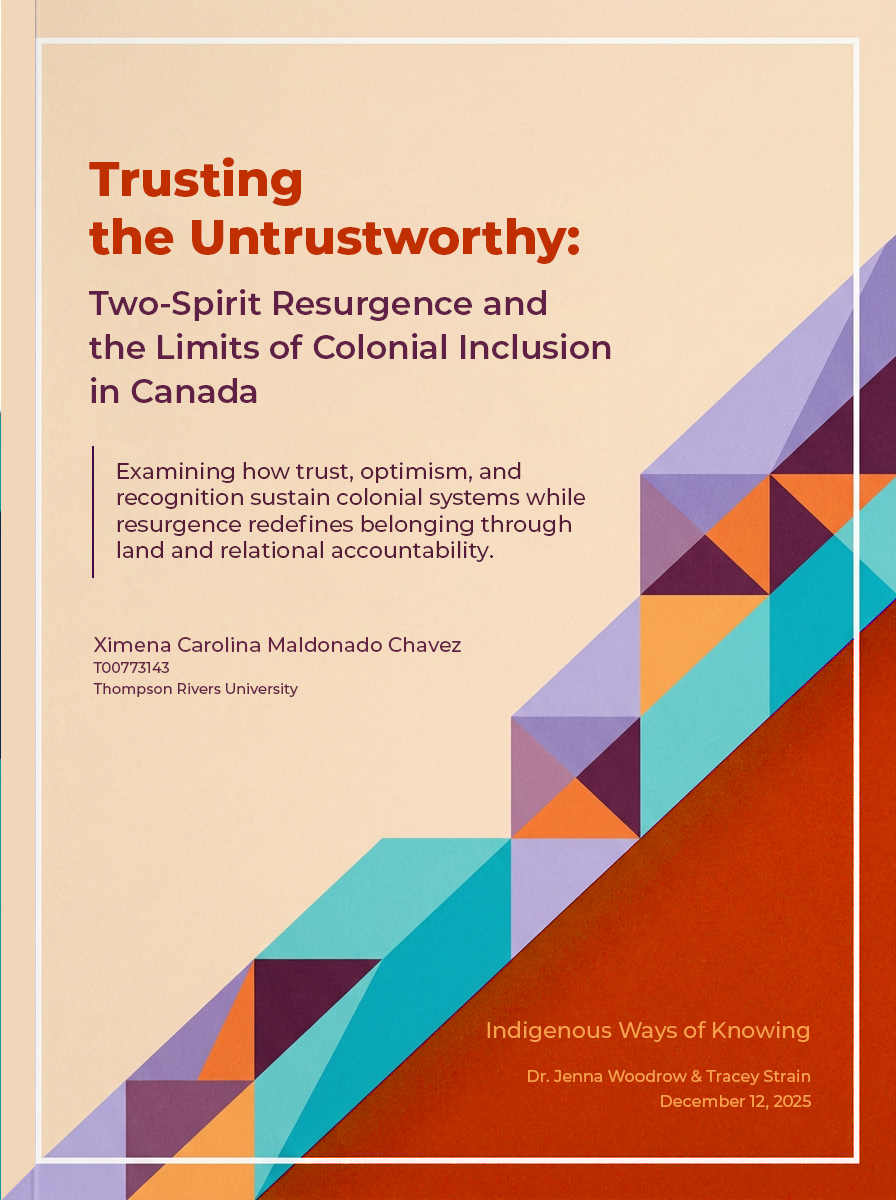
My paper, Trusting the Untrustworthy: Two-Spirit Resurgence and the Limits of Colonial Inclusion in Canada, examined the limits of institutional inclusion. A reflective journal connected the course’s teachings with my experiences, questions, and responsibilities as a newcomer.

Reflective journal
A reflective journal connected the course’s teachings with my experiences, questions, and responsibilities as a newcomer.
Read online
Genocide in the 20th Century
Who has the power to name violence—and shape its memory?
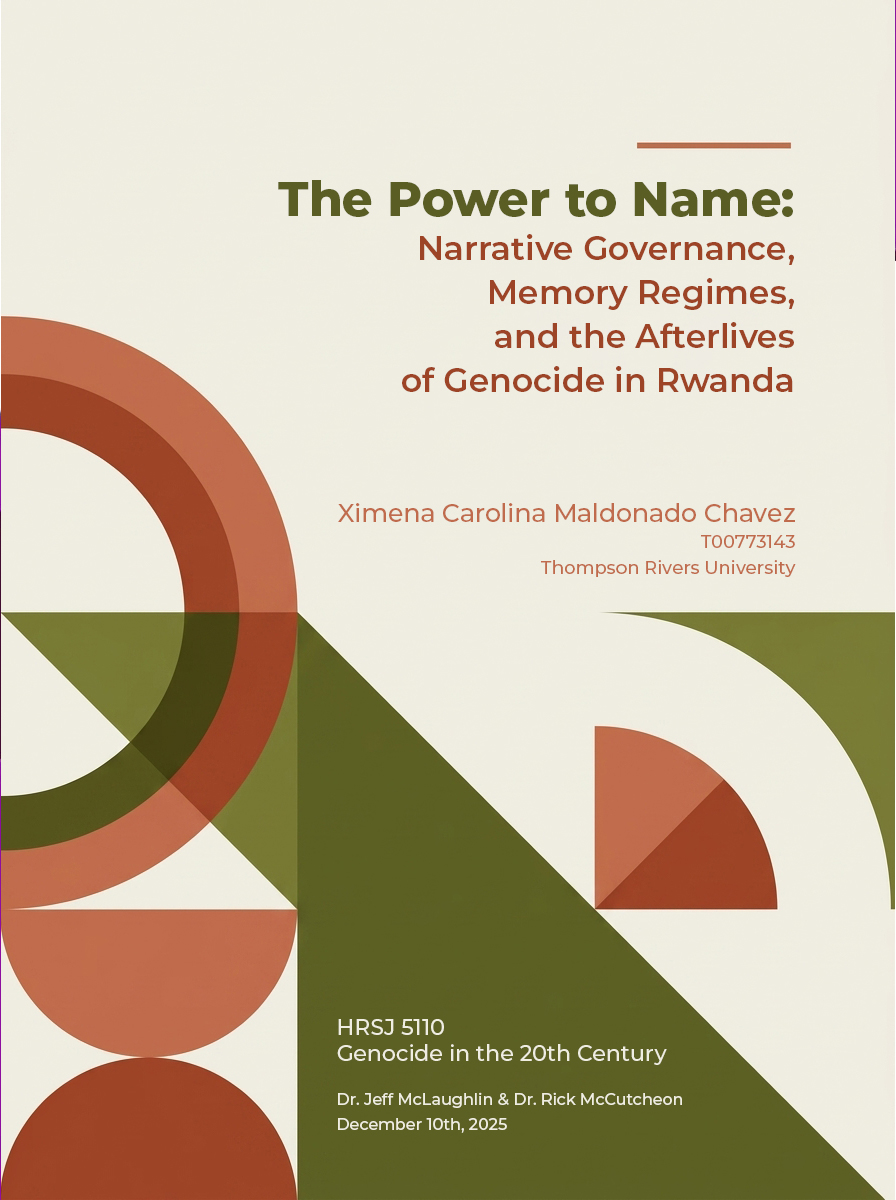
In The Power to Name: Narrative Governance, Memory Regimes, and the Afterlives of Genocide in Rwanda, I explored the relationships between narratives, governance, recognition, and remembrance.
Second Semester
Health for All: Global Inequities, Social Determinants and Medical Care
What becomes visible when we understand health through equity?
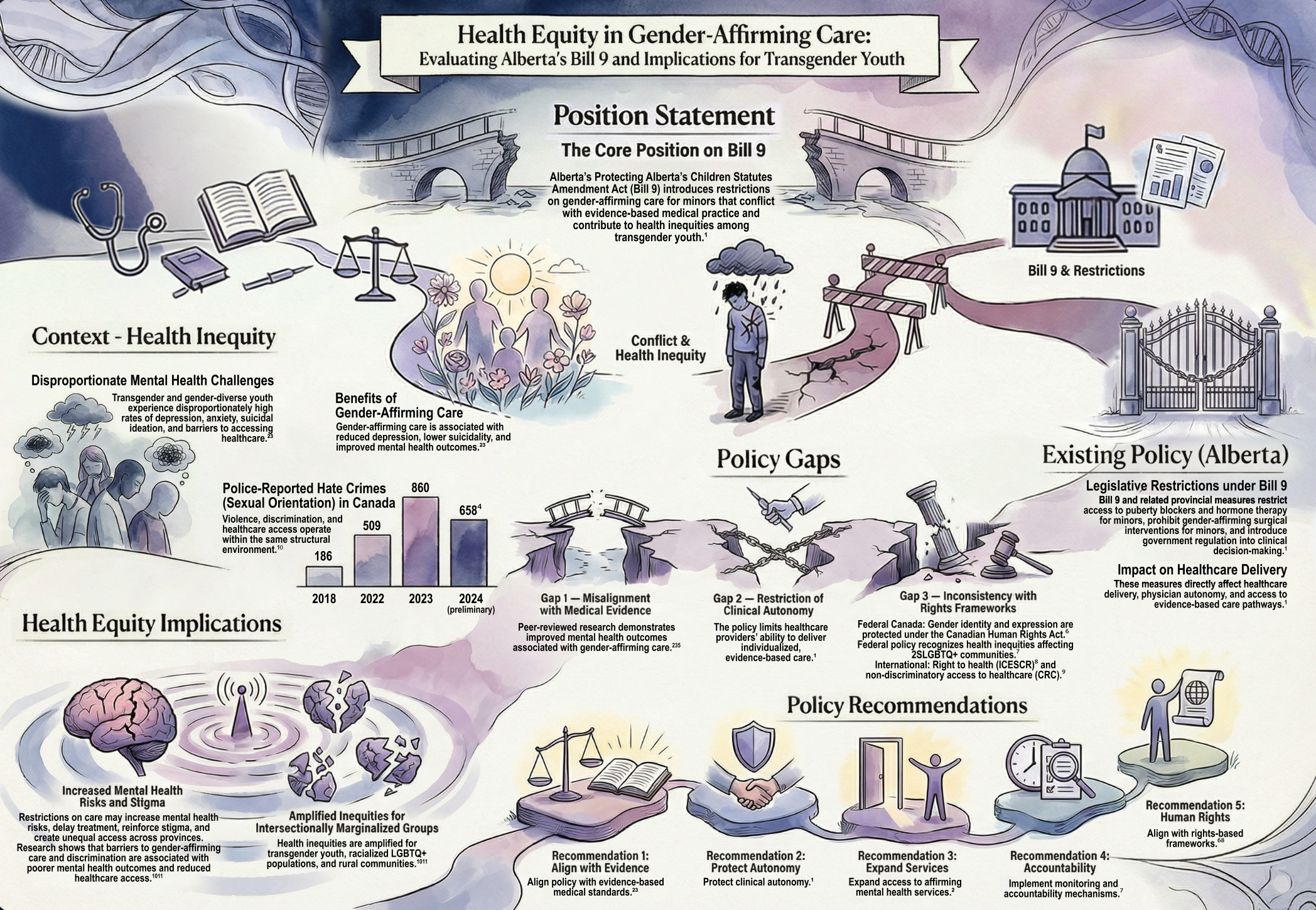
I completed the four-month Black Health Primer and developed commitments to change my practice. I also created an infographic, Health Equity in Gender-Affirming Care: Alberta’s Bill 9 and Implications for Transgender Youth, to communicate a complex health and rights issue to a wider audience.
Problem Solving in the Field
How can research lead to changes people can use?
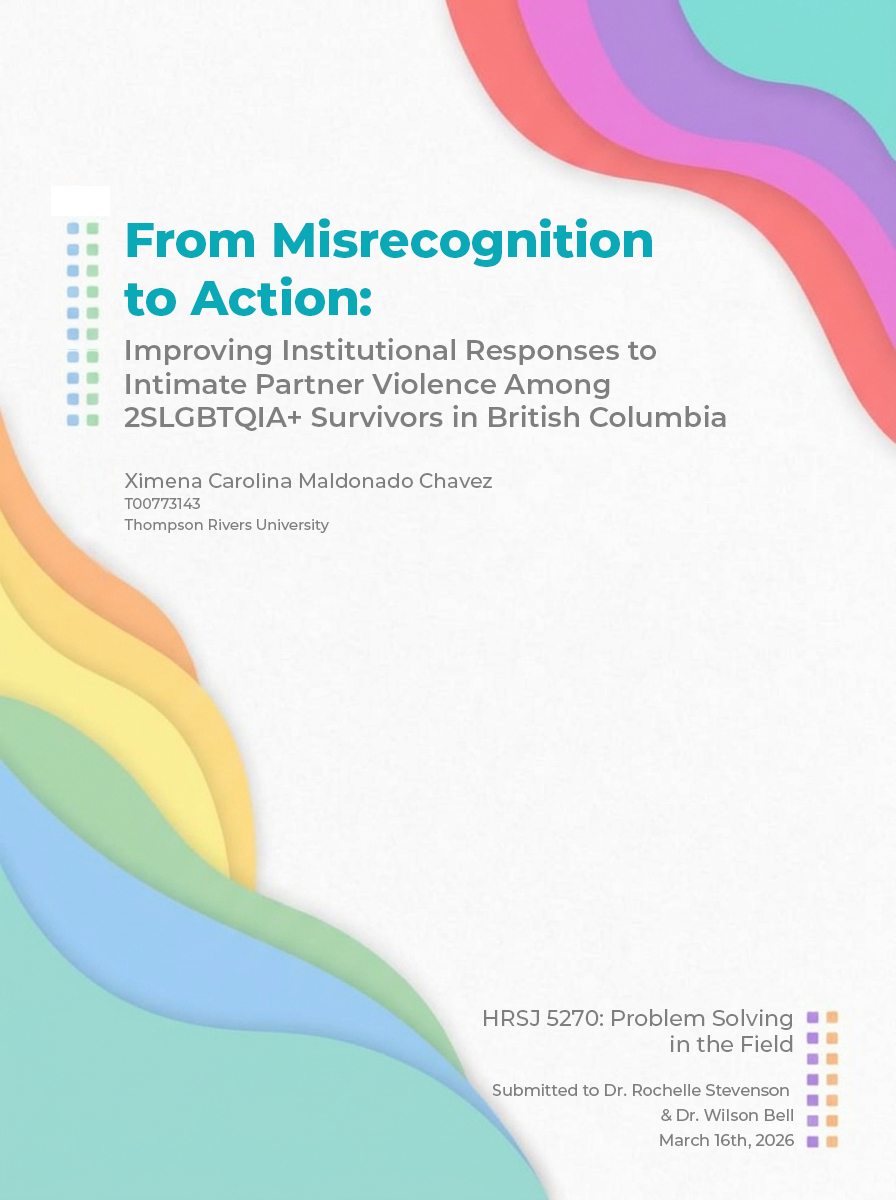
I developed a grant proposal, From Misrecognition to Action: Improving Institutional Responses to Intimate Partner Violence Among 2SLGBTQIA+ Survivors in British Columbia. The proposed participatory research connects survivor knowledge with recommendations for policy, institutions, and communities.
Trauma, Rights and Justice
What happens when repeated violence begins to feel ordinary?
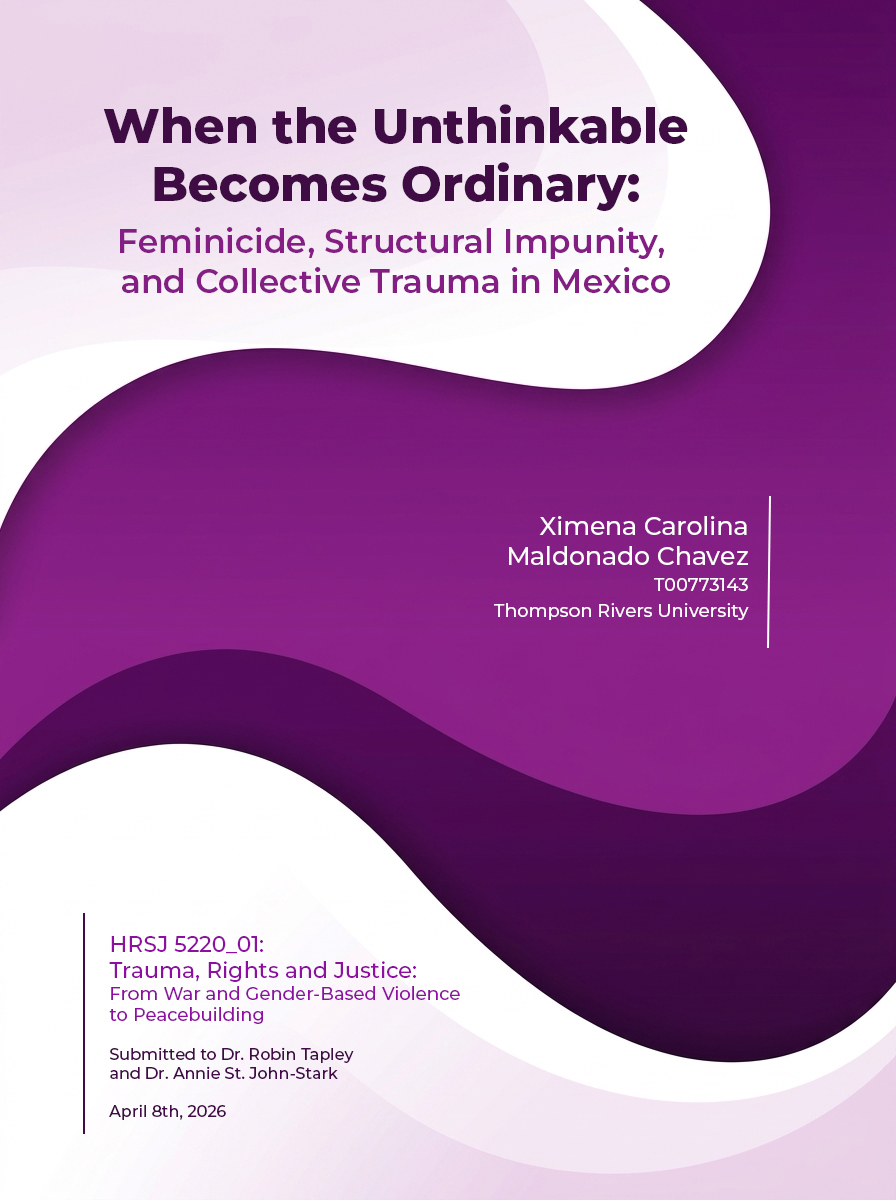
My paper, When the Unthinkable Becomes Ordinary: Feminicide, Structural Impunity, and Collective Trauma in Mexico, examined the connections between gendered violence, institutional responses, and collective suffering.
Third Semester
Practicum
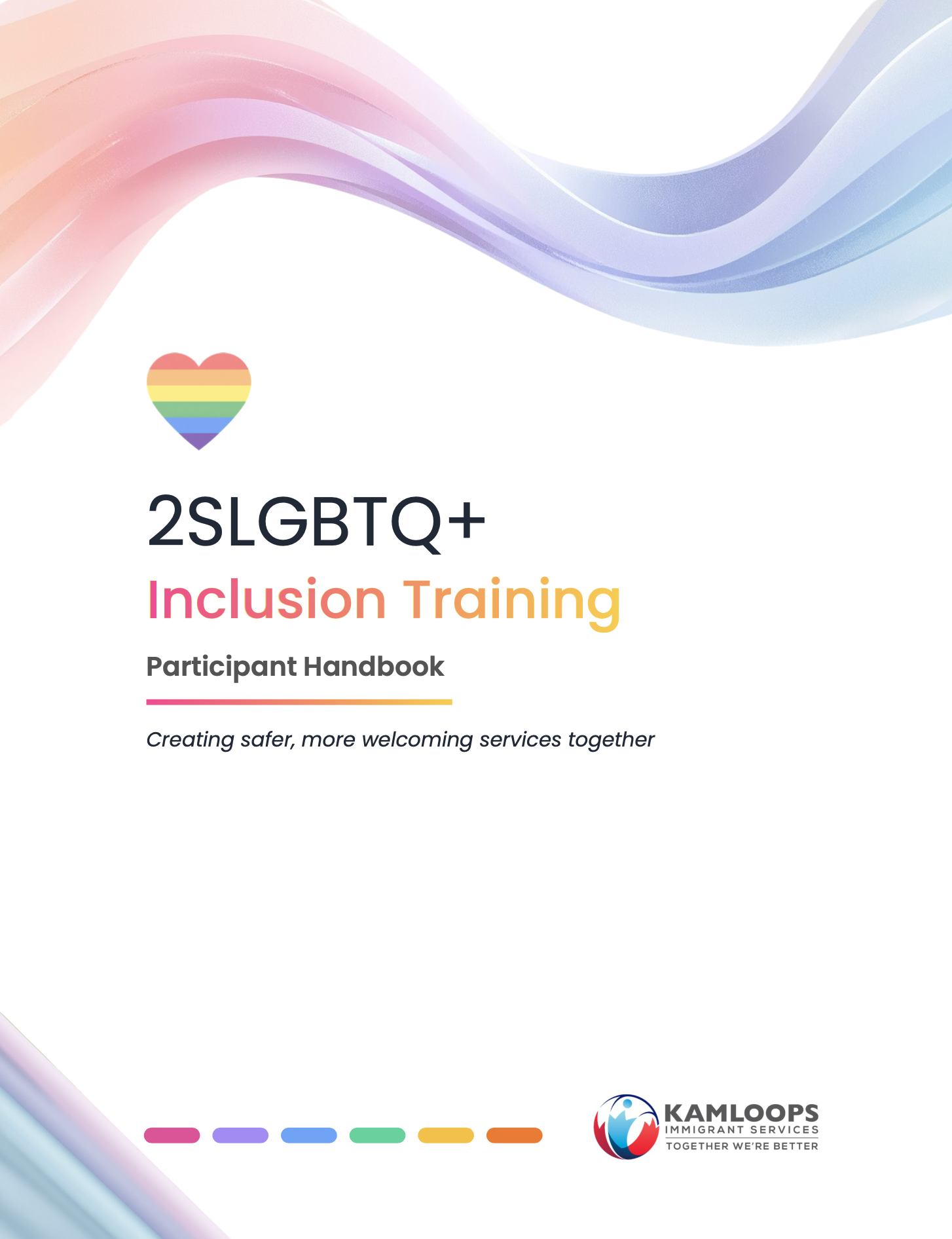
My placement at Kamloops Immigrant Services connected coursework with staff education and practical resources supporting 2SLGBTQIA+ inclusion. I discuss the experience in the separate Practicum reflection.
Final Semester
In progressEmergence of Global Capitalism
This course is extending my understanding of how economic systems, colonial histories, and inequality connect. I am considering how those relationships shape the conditions nonprofit organizations respond to, including displacement, insecurity, and unequal access to resources.
Critical Race Studies and Racial Justice
This course is giving me further tools to examine racialization, privilege, and apparently neutral institutional practices. I am connecting the readings with my experience moving between Mexico and Canada and with the responsibilities of antiracist advocacy.
An Assignment That Stayed With Me
Foundations in Human Rights and Social Justice
In the Space Between Sessions
This scrapbook gave me a way to approach the emotional weight of gendered violence through creative work. I chose letters because they allow space for grief, absence, anger, and connection: experiences that can become flattened in a conventional academic argument.
The texts are fictionalized for artistic and social-awareness purposes, preserving the privacy and integrity of therapeutic processes. I approached the project with attention to how suffering is represented and to the responsibility involved in making it public.
Creating it helped me connect my clinical background with advocacy. I learned that artistic work can invite people into a difficult conversation while requiring the same care with representation as research or professional communication. The scrapbook is now published through the International School of Radical Relationism.
Readings That Changed My Questions
Choosing only a few readings is difficult. Indigenous, Black feminist, Latin American, and decolonial scholarship have shaped my understanding through conversations across texts. These three influences capture part of that learning.
Miranda Fricker
Indigenous Ways of Knowing
In “Epistemic Injustice and a Role for Virtue in the Politics of Knowing,” Fricker examines how prejudice affects the credibility given to a speaker (2003). This reading changed how I think about listening. In therapy, research, or community services, someone may be invited to speak while their knowledge is still discounted. It encouraged me to examine my own judgments and the institutional conditions in which a person’s account is heard.
Patricia Hill Collins
Critical Race Studies and Racial Justice
The course’s reading “Black Feminist Epistemology” helped me think about lived experience, dialogue, care, and accountability as dimensions of knowing (Collins, Chapter 11). I connected this with my experience communicating across academic and community settings. It made me more attentive to whether knowledge remains accessible to the people whose lives it concerns.
Mónica J. Sánchez-Flores
An Additional Influence
Decolonizing Bodies connects racialization, embodied experience, and radical relationality (2026). Its discussion of Mexico and Canada resonates with the questions I carry between those places. It has encouraged me to consider how colonial histories are lived through bodies and relationships, and how humility and reciprocity might shape my practice.
Reading references
- Fricker, M. (2003). Epistemic injustice and a role for virtue in the politics of knowing. Metaphilosophy, 34(1–2), 154–173. Author’s text.
- Collins, P. H. “Black Feminist Epistemology.” In Black Feminist Thought: Knowledge, Consciousness, and the Politics of Empowerment, Chapter 11, pp. 251–271. The course outline lists the 2002 Routledge edition.
- Sánchez-Flores, M. J. (2026). Decolonizing bodies: A radical relational approach to racial healing and worlding shared humanity. Palgrave Macmillan. https://doi.org/10.1007/978-3-032-09752-1