
Learning to Recognize Power—Including My Own
When I first connected with feminism, it was uncomfortable and desirable at the same time. It questioned things I had learned to tolerate, while helping me understand that experiences I had carried privately could have collective and structural dimensions. Social justice coursework has continued that process. It has given me language, but it has also asked me to examine how I use that language and where I stand within the systems I critique.
Theory I Can Recognize Myself Within
In Theory as Liberatory Practice, bell hooks describes turning to theory through pain and the desire to understand her world. She also connects feminist theory with lived experience and the possibility of transformation (1991, pp. 1–2, 8). This resonates with my own relationship to learning. I am drawn to ideas that help people name what is happening and imagine how their lives could change.
Black feminist scholarship has made me more attentive to differences within communities and movements. Race, class, sexuality, gender, nationality, and disability affect how people encounter power. I have become more aware when speaking of a shared experience without considering whose reality that description leaves out. And that also have given me the strength to advocate unapologetically for the causes I believe in.
This also makes me reflect on the spaces intended for liberation and question why academia also can come from spaces of colonization and marginalization. Fer example, through my professional experience, I have encountered people who want to approach feminist to name violence, inequality or even a safe space, but feel hesitant about judgment or the expectation of knowing the right terms. I am concerned when belonging depends on intellectual confidence, or when feminism excludes trans women. These concerns ask me to consider how advocacy spaces can reproduce the boundaries they seek to challenge.
Moving Between Mexico and Canada
My studies intersect with the experience of becoming more aware of my racialization in Canada. My accent, language, and perceived identity carry meanings here that differ from those I experienced in Mexico. Privileges do not travel unchanged.
This realization has made me examine my own position more carefully. Experiencing exclusion in one setting does not erase the authority I may hold in another—as a professional, researcher, educator, or organizational representative. Mónica J. Sánchez-Flores’s Decolonizing Bodies has helped me think about these connections through embodied racialization and relational responsibility (2026).
Health for All and the Black Health Primer extended this understanding into health equity. They encouraged me to consider the circumstances surrounding a person’s health and access to care. My learning in Emergence of Global Capitalism and Critical Race Studies is continuing to develop these questions; I am still working through what they ask of my practice.
Bringing the Questions Into Collective Work
At TRUSU, outreach on Indigenous rights, the Red Dress Alert, reconciliation Calls to Action, women’s rights, LGBTQ+ rights, antiracism, and disability justice brings these issues into public conversation. The work asks me to connect a campaign with the people affected, make information accessible, and contribute to collective action with care.
I carry these responsibilities into my roles as a TA, RA, and Research Coach. I want academic ideas to open participation and critical thinking. That means paying attention to my explanations, the assumptions I make, and the forms of knowledge I recognize.
There is also an unresolved emotional connection between my advocacy here and my concern for Mexico. I am learning to hold that complexity without demanding a single, settled identity from myself. It keeps my understanding of solidarity connected to relationships across places.
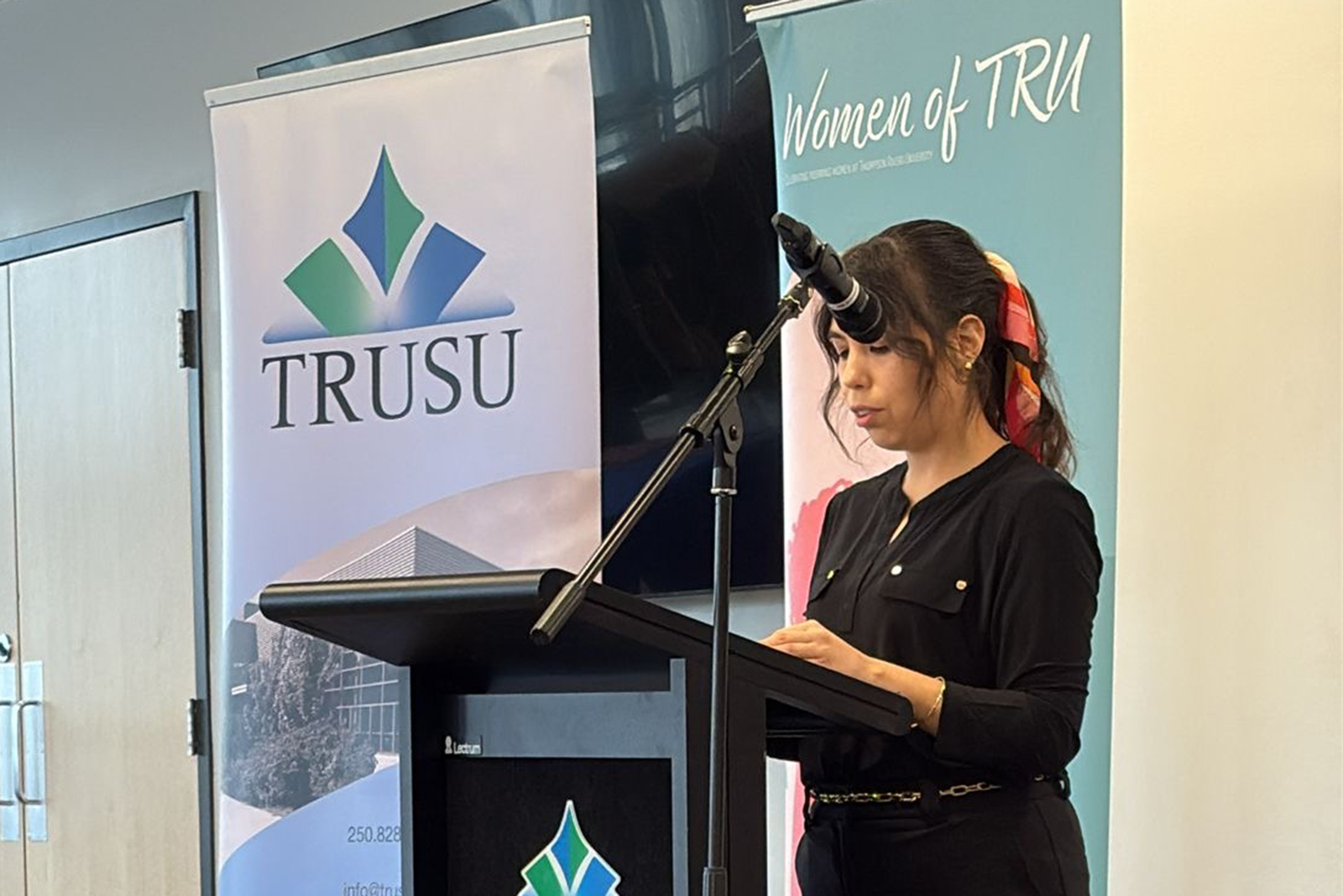
Social justice asks me to examine power wherever I encounter it—including in the spaces where I can influence what happens next.
My work
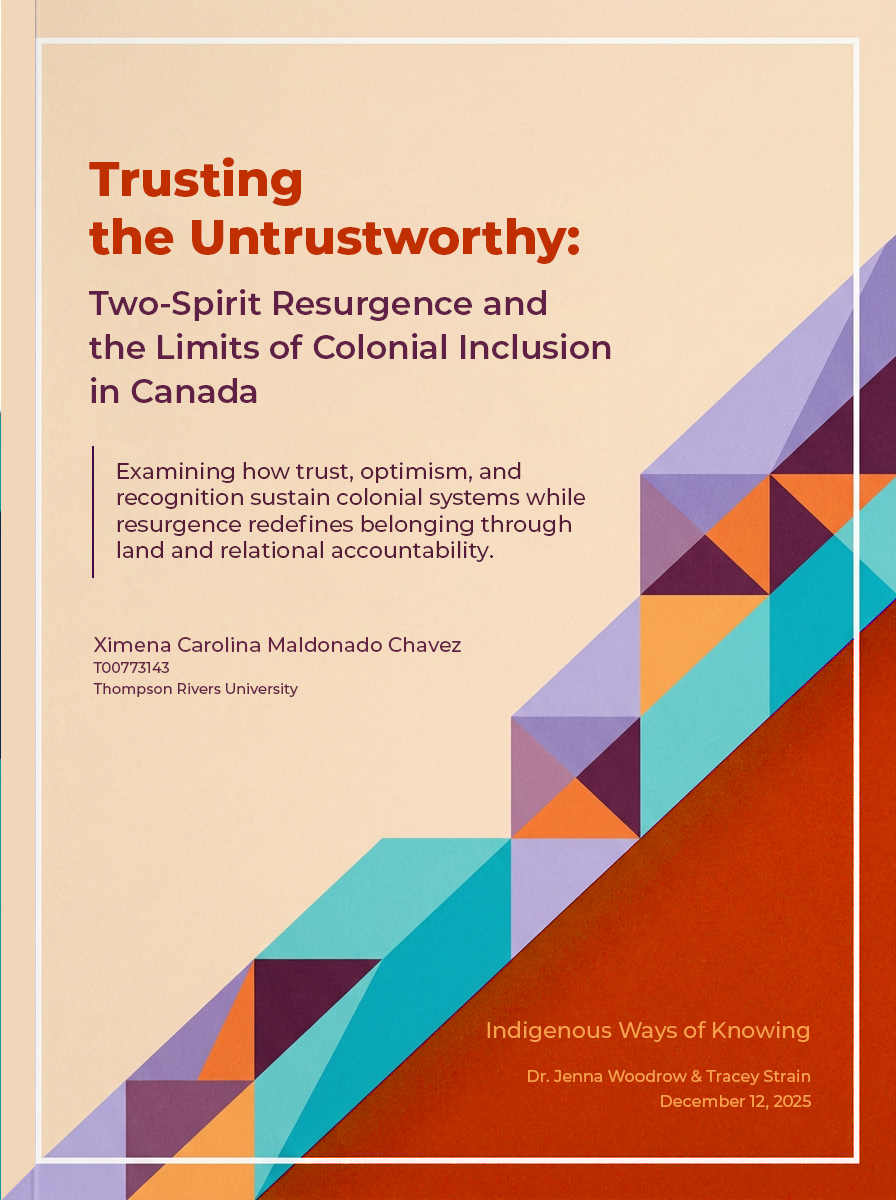
Trusting the Untrustworthy: Two-Spirit Resurgence and the Limits of Colonial Inclusion in Canada
I wrote about how Two-Spirit resurgence challenges institutional approaches to inclusion.
Read online
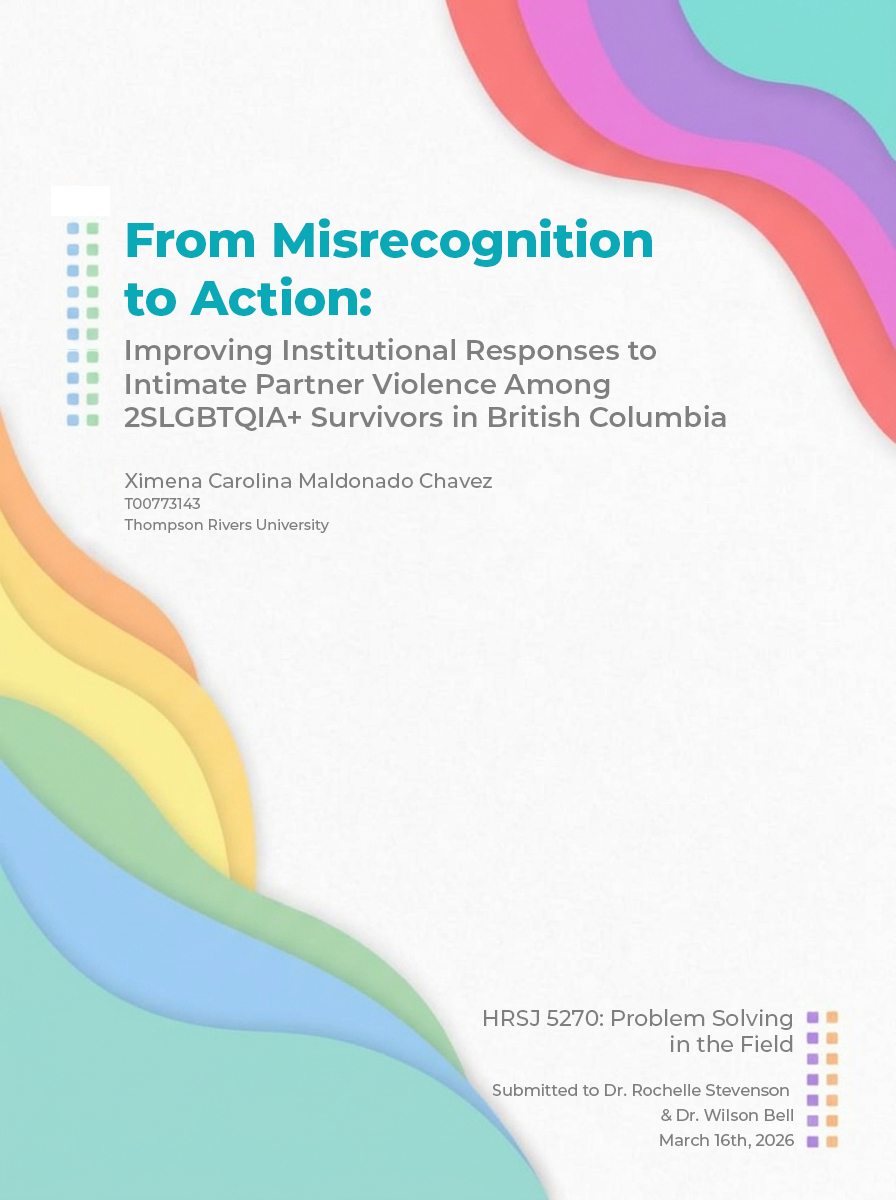
From Misrecognition to Action: Improving Institutional Responses to Intimate Partner Violence Among 2SLGBTQIA+ Survivors in British Columbia
The proposed participatory research connects survivor knowledge with recommendations for policy, institutions, and communities.
Read online
Reading references
- hooks, b. (1991). Theory as liberatory practice. Yale Journal of Law & Feminism, 4(1), 1–12.
- Sánchez-Flores, M. J. (2026). Decolonizing bodies: A radical relational approach to racial healing and worlding shared humanity. Palgrave Macmillan. https://doi.org/10.1007/978-3-032-09752-1