When Knowledge Becomes a Relationship
Some of my most meaningful learning has involved being present with people, places, and stories. These encounters changed the weight of ideas I had previously approached through reading. They also made learning feel more personal: I had to consider how I listened, what I carried away, and what I would give in return.
Learning Through Presence
In Indigenous Ways of Knowing, learning directly from Elder Harold helped me notice how knowledge is carried through story, rhythm, gesture, language, and the relationship between storyteller and listener. My journal reminded me the difference I felt between reading a story and hearing it shared in the room.
Learning to introduce myself in Secwepemctsín also brought a sense of vulnerability. I wanted to be respectful, while worrying about getting the words wrong. That experience encouraged me to remain attentive to the generosity involved in teaching and to the responsibility of receiving it.
Early in the course, I described the sense of warmth I felt as an apapacho: a word I associate with being held and comforted. As a newcomer missing home, I found so much similarities with Indigenous epistemologies and daily practices back home, like sharing food, listening, and learning together. I also felt cautious about drawing parallels too quickly. Familiarity could open a relationship while still requiring respect for differences in history, place, and meaning.
Hearing What I Had Read About
The residential school tour touched me differently from classroom reading. Hearing survivors’ stories in that building brought me closer to the emotional and relational dimensions of colonial violence and its continuing effects across generations.
I reflected on how laws and institutions can determine whose relationships, knowledge, and humanity receive protection and who’s they silence (and we must not allow it). I also thought about the many forms collective pain can take, and about my responsibilities as someone learning on this land.
The experience strengthened my understanding of relationality. Learning involves relationships with people, land, histories, and more-than-human life. I am still considering how reciprocity becomes visible in my decisions: through attention, respect for boundaries, recognition of authority, and sustained participation.
Taking Learning Into Public Life
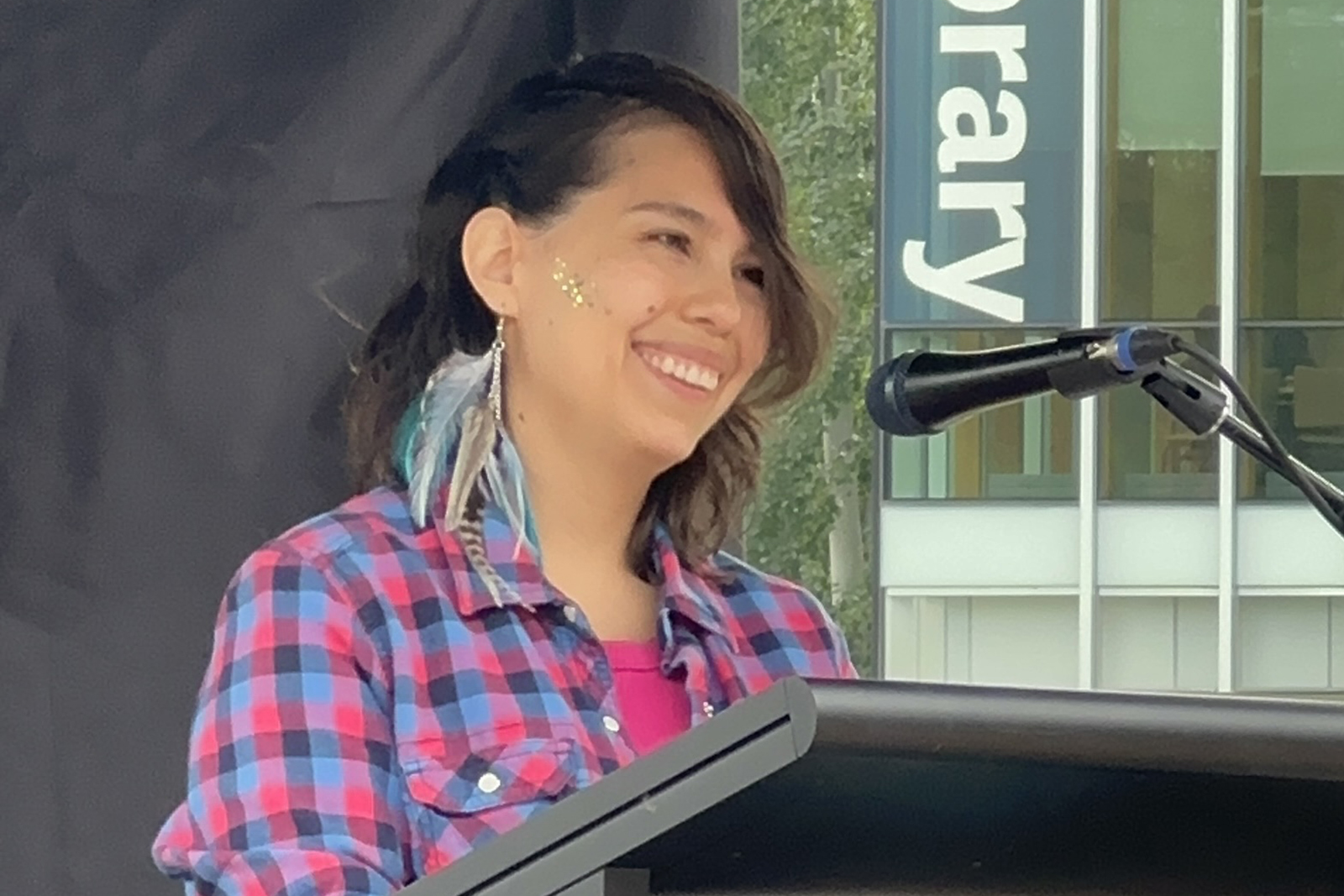
Alongside these course experiences, advocacy has given me opportunities to learn through action. Giving the TRUSU Pride speech required me to bring my personal experience into a public setting and consider how it could connect with a wider commitment to belonging.
I shared experiences of coming into my identity and encountering homophobia. I wanted the speech to honour people who are open about who they are, those still questioning, and those whose circumstances make visibility unsafe. The Omega’s coverage documents that moment and the themes of community and solidarity in the speech.
This experience helped me understand public communication as relational work. A story can make an issue visible, but sharing it also brings responsibilities toward the people listening.
My teaching, research support, Research Coach work, and community engagement continue this learning through participation. They ask me to explain, listen, adapt, and notice how others encounter an idea.
Experiential learning has made accountability more concrete for me: what I learn should change how I participate in the relationships around me.
My journal
Reflective journal
A reflective journal connected the course’s teachings with my experiences, questions, and responsibilities as a newcomer.
Read online
Related work: Dean, O. (2026, September 25). TRUSU hosts its 16th annual Pride parade. The Omega. My Indigenous Ways of Knowing journal provides the course-based reflections discussed here.