Whose Pain Becomes a Public Responsibility?
I came to this program with experience listening to people whose lives had been affected by violence. In clinical work, I could help someone name an experience, understand its effects, and find ways to move reinterpret it. Yet I also carried questions about what happens outside that relationship: who responds when someone seeks protection? What happens when their being and story does not fit an institution’s expectations?
Human rights coursework has helped me examine those questions more systematically. I now pay closer attention to the distance between formal recognition and the conditions that make a right usable. A protection can exist while someone still encounters disbelief, inaccessible services, or fear about the consequences of asking for help.
Naming Violence, Recognizing Lives
In Genocide in the 20th Century, my Rwanda research examined how narratives shape violence and its aftermath. I considered how naming, governance, and public memory influence whose experiences become recognized and which forms of grief and justice receive attention.
Writing the paper made me more careful about representation. An account can make harm visible while also narrowing the possibilities for understanding it. This matters to me as a researcher and communicator: I need to consider the sources I use, the categories I reproduce, and the experiences that might remain outside my argument.
My work on feminicide brought these questions closer to home. Mexico remains present in my studies through concern for people I love and through experiences from my professional life. In Trauma, Rights and Justice, I examined how structural impunity and the normalization of violence can become part of collective suffering. The project helped me connect psychological consequences with institutional responsibility.
My growing understanding of overincarceration raises related questions. Statistics Canada documents the persistent overrepresentation of Indigenous and Black adults in custody, alongside colonial and systemic conditions that contribute to it. This challenges me to examine how protection and punishment are distributed, and whose circumstances receive meaningful consideration (Statistics Canada, 2026).
Turning Concern Into a Specific Demand
My TRUSU advocacy work gives this learning a practical direction. Writing letters connected to Amnesty International’s Urgent Actions requires me to move from concern to a clear request: identify the issue, understand the rights involved, and communicate what authorities are being asked to do. My letters and related publications form part of the Union’s public advocacy work.
I also participate in Write for Rights, which connects local action with international solidarity. These activities have strengthened my understanding of advocacy as careful, sustained communication. Accuracy matters because a compelling message must remain accountable to the people and circumstances it describes.
Human rights learning has therefore changed the way I approach both research and action. I ask more specific questions, look more carefully at institutional responses, and connect emotional engagement with practical demands. In nonprofit work, I want to bring that combination to programs that support people while also addressing the barriers they encounter.
A person’s pain should not have to become exceptional before it becomes a public responsibility.
My papers
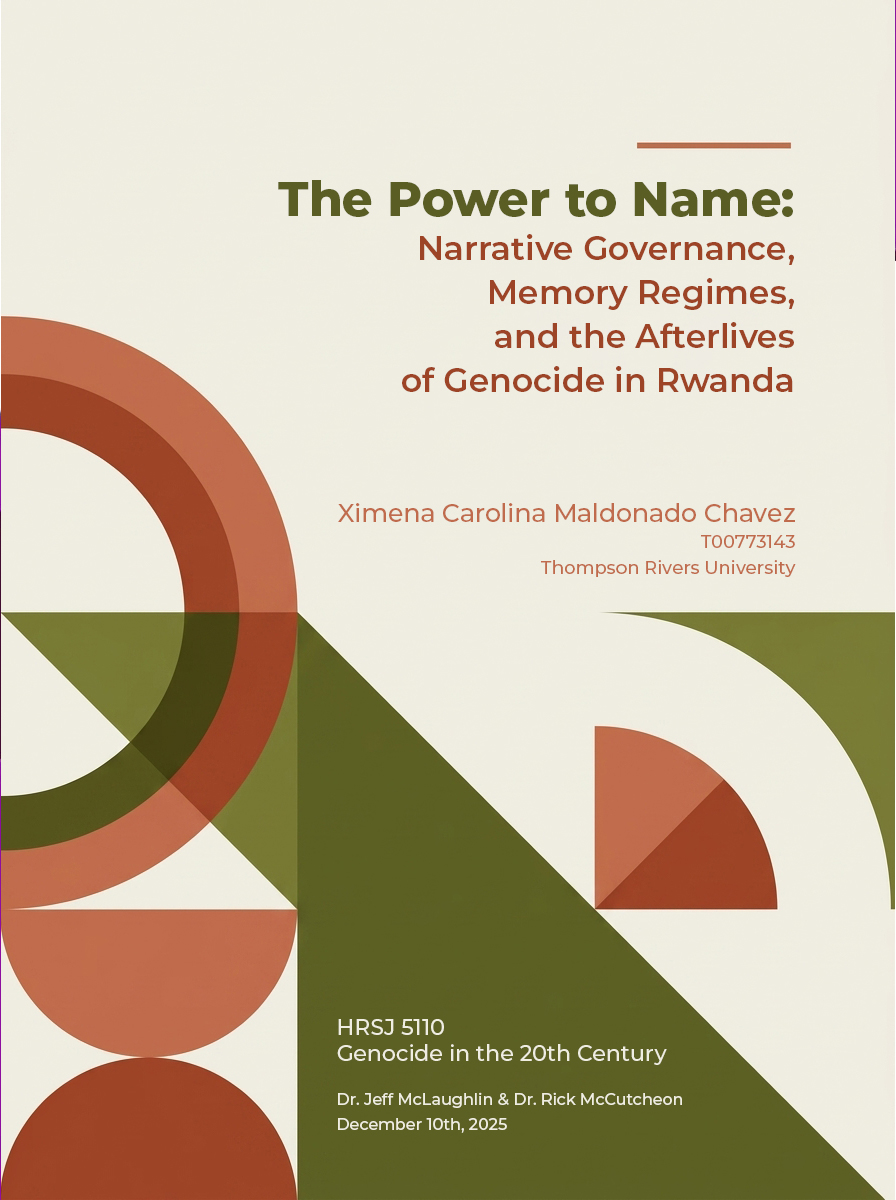
The Power to Name: Narrative Governance, Memory Regimes, and the Afterlives of Genocide in Rwanda
I explored the relationships between narratives, governance, recognition, and remembrance.
Read online
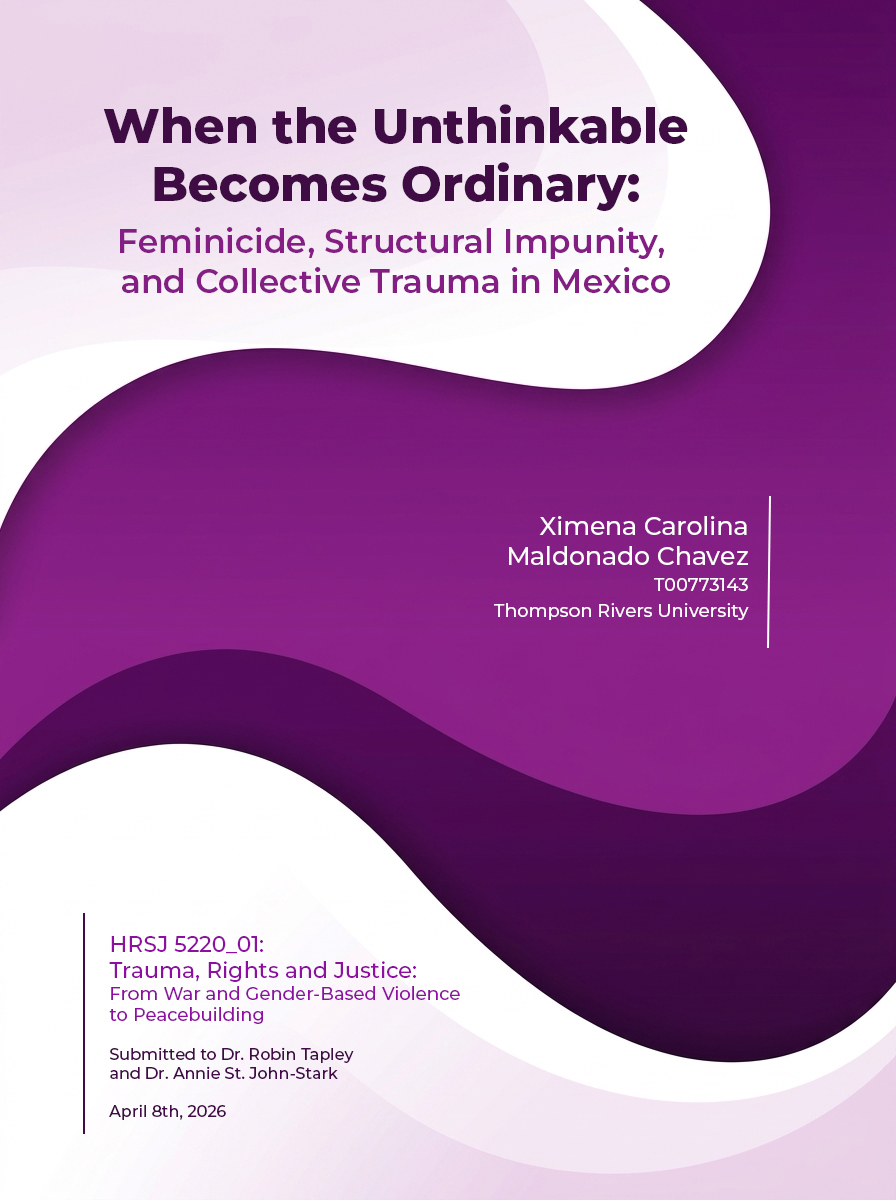
When the Unthinkable Becomes Ordinary: Feminicide, Structural Impunity, and Collective Trauma in Mexico
I examined the connections between gendered violence, institutional responses, and collective suffering.
Read online
Sources and related work
- Statistics Canada. (2026, January 14). Overrepresentation of Indigenous and Black adults in provincial and federal custody.
- TRUSU Amnesty Urgent Actions: advocacy letters and publications.
- My papers: The Power to Name; When the Unthinkable Becomes Ordinary.