
Making Care Part of Everyday Practice
My practicum at Kamloops Immigrant Services brought my studies into an organizational setting where inclusion depends on everyday decisions. Working on resources supporting 2SLGBTQIA+ newcomers meant considering how migration, gender, sexuality, racism, trauma, and access to services intersect, and how staff could make all the difference between protection and harm.
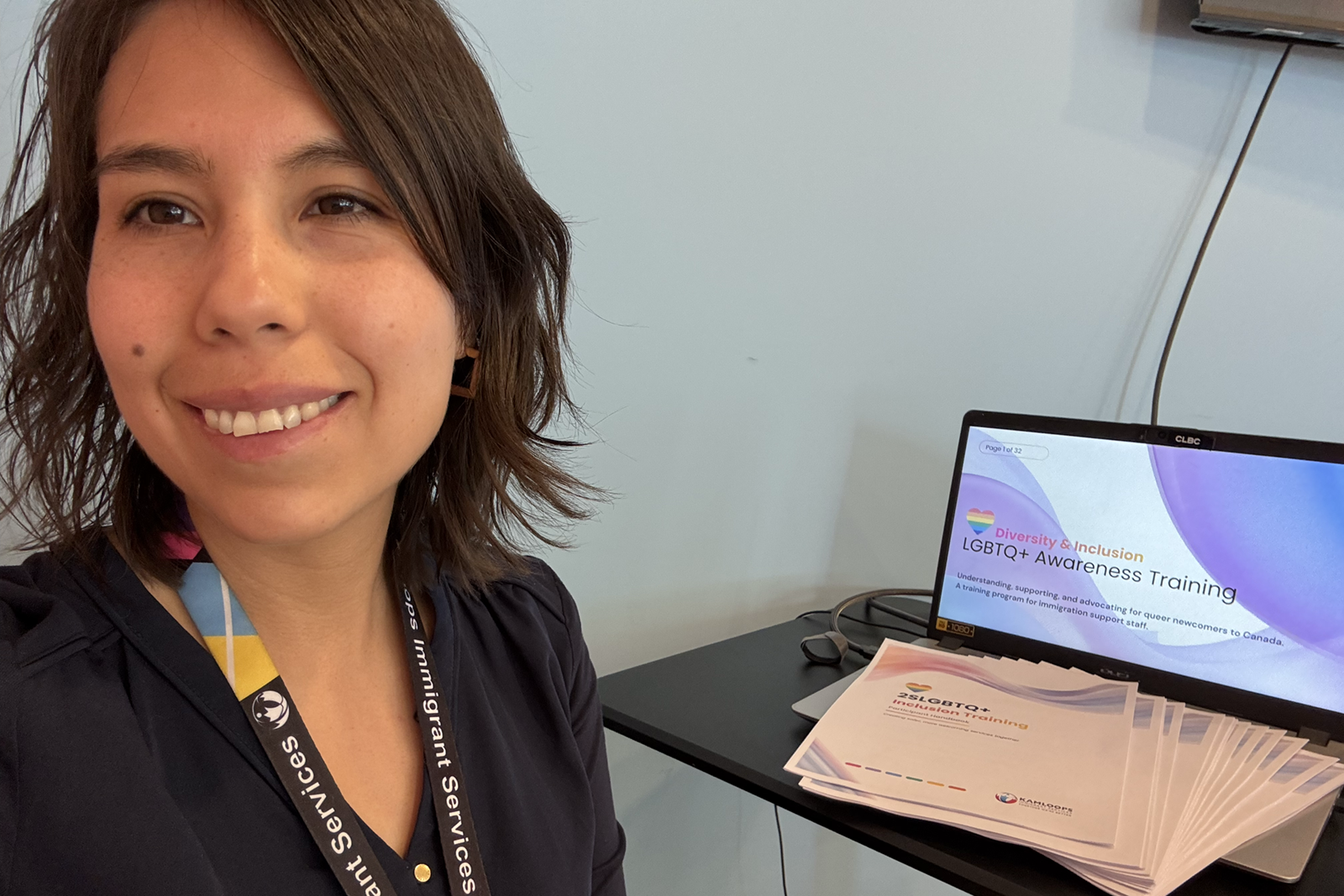
The placement asked me to translate learning into something usable. I developed staff training, a handbook, a training video, and an equity and inclusion commitment. I also created materials supporting attention to client needs and evaluation. Preparing these resources required decisions about scope, language, accessibility, and how to connect complex content with practice.
Bringing Coursework Into Service Delivery
My coursework helped me look beyond whether an organization describes itself as welcoming. I considered how someone might experience an intake process, a question about identity, or a request to disclose personal information. A person’s willingness to share cannot be separated from the trust and safety surrounding the interaction.
Trauma, Rights and Justice reminded me about autonomy, emotional safety, and the possibility of retraumatization. Health for All strengthened my understanding of barriers affecting access to support. Indigenous Ways of Knowing encouraged be aware on how colonization histories shape the present, and our responsibility to question, have positionality and act accordingly.
My clinical background also shaped the approach. It helped me connect staff learning with the importance of listening, avoiding assumptions, and responding sensitively to difficult experiences. The practicum required me to communicate that knowledge in ways relevant to settlement services in a topic that I came to discover is not as accepted in this Country as some people like to think.
Facilitating the presentation was an important part of this process. I had to make the material engaging enough to invite discussion while keeping the complexity of people’s experiences visible. The task strengthened my ability to communicate across professional perspectives and connect concepts with concrete situations and act with humility when sharing stories of others, even with their permission.
What the Placement Taught Me in Return
The experience sharpened my understanding of implementation. A commitment needs guidance, time, resources, and continuity. Staff need materials they can revisit, and learning needs a place within the organization’s routines.
KIS continues to use my video and handbook for staff training. The equity and inclusion commitment I developed is signed by incoming staff, and my video is available as a website resource. These developments matter to me because the work continues beyond my placement. They show how a student project can become part of an organization’s ongoing practice.
Related organizational context: KIS Diversity Outreach Program.